Abstract
Tourism development has become an important driver of economic growth, cultural exchange, and regional development across the world. It creates employment opportunities, enhances infrastructure, promotes local entrepreneurship, and generates income for communities while contributing to national economic progress. At the same time, tourism significantly influences local culture, traditional lifestyles, natural resources, and the social structure of host communities. This study examines the impact of tourism development on local culture, community livelihoods, and sustainable regional development. It explores both the positive and negative effects of tourism by analyzing how cultural heritage, traditional customs, handicrafts, festivals, and indigenous knowledge are preserved and promoted through responsible tourism practices. The study also highlights the role of tourism in improving employment, income generation, entrepreneurship, and the quality of life of local communities. Furthermore, it discusses the importance of sustainable tourism in balancing economic growth with environmental conservation, cultural preservation, and social inclusion. Challenges such as environmental degradation, commercialization of culture, over-tourism, waste generation, and unequal distribution of tourism benefits are also examined. The study emphasizes that effective tourism planning, community participation, environmental protection, and responsible governance are essential for achieving sustainable regional development. It concludes that tourism can become a powerful instrument for inclusive and sustainable growth when local communities actively participate in tourism planning and cultural heritage is protected alongside economic development. Sustainable tourism policies therefore contribute to long-term regional prosperity, environmental conservation, and the preservation of cultural identity.
- Tourism Development
- Local Culture
- Community Livelihoods
- Sustainable Regional Development
- Cultural Heritage
- Sustainable Tourism
- Eco-tourism
- Community Participation
- Economic Development
- Cultural Preservation
Introduction#
Tourism has emerged as one of the fastest-growing sectors of the global economy, contributing significantly to economic development, employment generation, infrastructure improvement, cultural exchange, and regional prosperity. It is recognized as a powerful instrument for promoting sustainable development because it creates opportunities for income generation while encouraging the conservation of natural and cultural resources. Tourism encompasses a wide range of activities, including cultural tourism, heritage tourism, eco-tourism, rural tourism, adventure tourism, religious tourism, and medical tourism, each of which contributes differently to local and regional development. As people increasingly travel for leisure, education, business, spirituality, and recreation, tourism has become an essential source of revenue for governments, local businesses, and host communities. The growth of tourism stimulates investments in transportation, accommodation, communication, healthcare, hospitality, and public infrastructure, thereby improving the overall quality of life within tourist destinations. At the same time, tourism facilitates cultural interaction by allowing visitors to experience local traditions, customs, languages, festivals, cuisine, handicrafts, and historical heritage, promoting mutual understanding and cultural appreciation among diverse communities. However, the rapid expansion of tourism also presents significant challenges, including environmental degradation, commercialization of traditional cultures, overcrowding, excessive resource consumption, waste generation, and social inequalities. Therefore, sustainable tourism development seeks to balance economic growth with environmental conservation, cultural preservation, and community well-being.
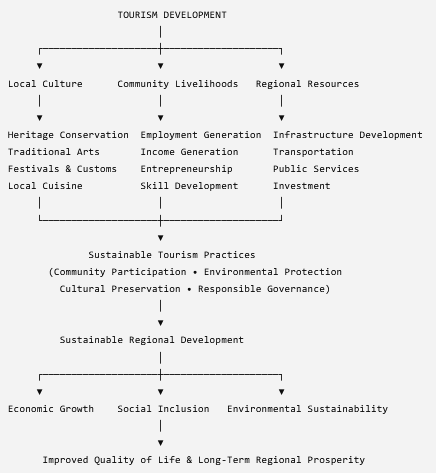
Figure: Conceptual Background
The impact of tourism extends beyond economic benefits, as it directly influences local culture, community livelihoods, and long-term regional development. Tourism provides employment opportunities in hotels, restaurants, transport services, handicrafts, guiding services, entertainment, agriculture, and small-scale enterprises, thereby improving household income and reducing poverty in many regions. Local communities often benefit through entrepreneurship, skill development, women's empowerment, and improved access to education, healthcare, and public services resulting from tourism-related investments. Simultaneously, tourism encourages the preservation of historical monuments, cultural festivals, traditional arts, indigenous knowledge, and local customs by increasing their economic and cultural value. Nevertheless, if tourism is poorly planned, it may lead to cultural commodification, loss of traditional identity, environmental pollution, biodiversity loss, rising living costs, and unequal distribution of economic benefits. In the modern era, digital technologies, online travel platforms, social media marketing, and smart tourism initiatives have further transformed the tourism industry by increasing accessibility and global connectivity while creating new opportunities for sustainable destination management. Consequently, governments, tourism authorities, local communities, environmental organizations, and private stakeholders increasingly emphasize responsible tourism practices that promote environmental sustainability, community participation, cultural conservation, and inclusive regional development. Understanding the relationship between tourism development, local culture, community livelihoods, and sustainable regional development is therefore essential for designing effective tourism policies that maximize socio-economic benefits while minimizing environmental and cultural impacts.
Impact of Tourism Development on Local Culture#
Tourism development has a profound influence on local culture by shaping the preservation, promotion, transformation, and commercialization of cultural heritage, traditions, customs, languages, arts, and lifestyles within host communities. Culture represents the collective identity of a society, encompassing its history, beliefs, festivals, architecture, cuisine, music, dance, handicrafts, rituals, folklore, and indigenous knowledge that have evolved over generations. Tourism creates opportunities for local communities to showcase these cultural assets to national and international visitors, thereby enhancing cultural awareness, appreciation, and economic value. One of the most significant positive impacts of tourism is the preservation of cultural heritage. Increased tourist interest often encourages governments, local authorities, and cultural organizations to restore historical monuments, archaeological sites, museums, temples, forts, palaces, and heritage buildings that might otherwise deteriorate due to neglect or lack of financial resources. Revenue generated from tourism contributes to the conservation and maintenance of these cultural landmarks, ensuring that they remain protected for future generations. Tourism also revitalizes traditional arts and crafts by creating markets for handmade textiles, pottery, wood carvings, paintings, jewelry, embroidery, bamboo products, and other locally produced handicrafts. Local artisans benefit economically from increased demand while preserving traditional skills that might otherwise disappear due to modernization. Cultural festivals, folk dances, music performances, religious ceremonies, and traditional fairs also receive greater recognition because tourism attracts visitors interested in experiencing authentic local traditions. Such events strengthen community pride, reinforce cultural identity, and encourage younger generations to participate in preserving their cultural heritage. Tourism further promotes intercultural exchange by bringing together people from different linguistic, religious, and cultural backgrounds. Visitors gain valuable insights into local customs and traditions, while host communities become more aware of global cultures, encouraging mutual respect, tolerance, and international understanding. Culinary tourism has similarly contributed to preserving regional cuisines, traditional cooking methods, indigenous agricultural practices, and local food products by increasing demand for authentic cultural experiences. However, despite these positive contributions, tourism may also create significant challenges for local culture when development is poorly planned or driven solely by commercial interests. One of the major concerns is the commercialization or commodification of culture, where traditional customs, rituals, festivals, and performances are modified primarily to satisfy tourist expectations rather than preserving their original cultural significance. In some destinations, cultural expressions become staged performances designed for entertainment, gradually losing their authenticity and spiritual value. Traditional clothing, ceremonies, and festivals may be altered to suit commercial schedules, reducing their cultural importance within local communities. Another challenge involves the gradual erosion of indigenous languages, customs, and lifestyles as communities adapt to global tourism markets and external cultural influences. Increased interaction with tourists may encourage younger generations to adopt foreign languages, fashion, entertainment, and consumer behaviour at the expense of their traditional cultural identity. Rapid urbanization associated with tourism development may also replace traditional architecture and local settlements with modern commercial infrastructure, resulting in the loss of historical character and community identity. Over-tourism represents another significant issue affecting culturally important destinations. Excessive visitor numbers can place tremendous pressure on historical monuments, religious sites, museums, and heritage areas, causing physical deterioration, overcrowding, waste generation, noise pollution, and disruption of local religious and cultural practices. Sacred sites may lose their spiritual atmosphere when overwhelmed by commercial tourism activities. Furthermore, unequal distribution of tourism benefits can create social tensions within communities if only certain groups benefit economically while others experience rising living costs, displacement, or reduced access to traditional resources. Cultural misunderstandings may also arise when tourists fail to respect local customs, dress codes, religious beliefs, or community traditions, leading to conflicts between visitors and residents. In the modern era, digital technology and social media have significantly influenced cultural tourism by increasing global visibility of cultural destinations and promoting virtual cultural experiences. While online platforms help preserve and promote cultural heritage through digital documentation, virtual museums, and cultural storytelling, they also contribute to mass tourism by attracting large numbers of visitors to previously less-known destinations. Therefore, responsible destination management has become essential for protecting fragile cultural resources. Governments, heritage organizations, tourism authorities, and local communities must collaborate to develop sustainable cultural tourism policies that balance economic benefits with cultural preservation. Community participation is particularly important because local residents possess traditional knowledge and cultural expertise necessary for protecting their heritage. Educational programmes, cultural awareness campaigns, heritage conservation projects, and responsible tourism guidelines encourage both tourists and local communities to respect cultural diversity and safeguard historical assets. UNESCO World Heritage initiatives and various national heritage conservation programmes have further emphasized the importance of preserving tangible and intangible cultural heritage through sustainable tourism practices. Ultimately, tourism development can become a powerful force for cultural preservation, intercultural dialogue, and community empowerment when managed responsibly. By protecting authentic traditions, promoting local participation, encouraging heritage conservation, and preventing excessive commercialization, tourism contributes to maintaining cultural identity while generating sustainable economic opportunities for host communities. Therefore, integrating cultural preservation into tourism planning remains essential for ensuring that tourism supports rather than undermines the rich cultural diversity that makes destinations unique and valuable for present and future generations.
# **3. Influence of Tourism Development on Community Livelihoods**
Tourism development plays a crucial role in improving community livelihoods by generating employment opportunities, increasing household income, promoting entrepreneurship, enhancing infrastructure, and creating new avenues for socio-economic development. As one of the world's fastest-growing economic sectors, tourism contributes significantly to poverty reduction and inclusive growth, particularly in rural, coastal, mountainous, and culturally rich regions where alternative employment opportunities may be limited. The expansion of tourism creates direct employment in hotels, restaurants, travel agencies, transport services, tour operations, tourist guiding, hospitality management, and recreational activities. It also generates numerous indirect employment opportunities in agriculture, handicrafts, construction, fisheries, food processing, local markets, and other supporting industries that supply goods and services to tourists. Consequently, tourism stimulates local economic activities, increases household income, and improves the standard of living of host communities. One of the most significant contributions of tourism is the promotion of local entrepreneurship. Tourism encourages individuals and families to establish small and medium enterprises such as guesthouses, homestays, souvenir shops, handicraft centres, traditional food outlets, eco-tourism ventures, transport services, and cultural performance groups. These enterprises not only generate income for local residents but also strengthen local economies by encouraging the circulation of financial resources within the community. Women, youth, and marginalized groups particularly benefit from tourism-related entrepreneurship, as it provides opportunities for self-employment, financial independence, and skill development. Community-based tourism initiatives further empower local residents by enabling them to participate directly in tourism planning, management, and decision-making while ensuring that economic benefits remain within the community. Tourism also contributes to the development of human capital by encouraging education, vocational training, language learning, hospitality management, digital marketing, and customer service skills that improve employability and professional growth. Governments and private organizations frequently organize training programmes to enhance the competencies of local residents, enabling them to participate more effectively in the tourism industry. In addition to employment and entrepreneurship, tourism often stimulates investments in public infrastructure such as roads, airports, railways, communication networks, healthcare facilities, sanitation systems, electricity, water supply, and internet connectivity. These infrastructural improvements benefit not only tourists but also local communities by improving access to education, healthcare, transportation, and public services. Tourism development also promotes agricultural diversification by creating demand for locally produced fruits, vegetables, dairy products, seafood, spices, and traditional food items, thereby increasing farmers' income and supporting sustainable rural development. Furthermore, tourism encourages the preservation and commercialization of traditional handicrafts, cultural products, performing arts, and indigenous knowledge, providing artisans and cultural practitioners with sustainable sources of livelihood while protecting local heritage. However, despite its considerable socio-economic benefits, tourism development also presents several challenges that may negatively affect community livelihoods if not managed sustainably. One of the major concerns is the unequal distribution of tourism income, where large corporations, external investors, or multinational hotel chains capture a significant share of tourism revenue while local communities receive relatively limited economic benefits. This economic leakage reduces the overall contribution of tourism to local development and increases socio-economic inequality. Seasonal tourism also creates employment instability because many tourism-related jobs are temporary and dependent on tourist arrivals, weather conditions, or holiday seasons. During off-season periods, employees may experience unemployment, reduced income, and financial insecurity. Additionally, excessive dependence on tourism makes local economies vulnerable to external shocks such as natural disasters, pandemics, political instability, economic recessions, and climate change, as demonstrated during the COVID-19 pandemic when global tourism activities declined dramatically. Rapid tourism expansion may also increase the cost of living by raising land prices, housing costs, food prices, and the overall cost of goods and services, making it difficult for local residents to afford basic necessities. In some destinations, tourism development has resulted in displacement of local populations due to commercial infrastructure expansion and land acquisition for hotels, resorts, and tourism facilities. Environmental degradation caused by over-tourism, waste generation, water scarcity, pollution, and destruction of natural ecosystems may further threaten the traditional livelihoods of farmers, fishermen, and indigenous communities that depend on natural resources. Cultural commodification and changing social values may also influence traditional occupations and lifestyles, particularly among younger generations who may abandon traditional professions in favour of tourism-related employment. Therefore, sustainable tourism planning is essential to ensure that tourism contributes positively to community livelihoods without compromising environmental sustainability or cultural identity. Governments should promote community participation, equitable benefit-sharing, local ownership of tourism enterprises, capacity-building programmes, and inclusive tourism policies that prioritize the welfare of host communities. Public-private partnerships, financial assistance for local entrepreneurs, skill development initiatives, and responsible tourism practices can strengthen local economies while minimizing socio-economic inequalities. Eco-tourism, rural tourism, heritage tourism, and community-based tourism models have emerged as effective approaches for balancing economic development with environmental conservation and social inclusion. Ultimately, tourism development can significantly enhance community livelihoods by creating employment, increasing income, promoting entrepreneurship, improving infrastructure, and empowering local populations. When supported by responsible governance, active community participation, and sustainable development policies, tourism becomes a powerful instrument for reducing poverty, improving quality of life, strengthening social inclusion, and promoting long-term economic resilience. Therefore, integrating livelihood enhancement into tourism planning remains essential for ensuring that tourism development contributes to inclusive, equitable, and sustainable regional growth while preserving the cultural and environmental resources upon which tourism itself depends.
Conclusion#
Tourism development has become one of the most significant drivers of economic growth, cultural preservation, community empowerment, and sustainable regional development in the twenty-first century. The present study demonstrates that tourism extends far beyond recreational travel, serving as a multidimensional development strategy that influences economic, social, cultural, and environmental dimensions of society. The findings indicate that tourism contributes substantially to local and regional economies by generating employment opportunities, increasing household income, promoting entrepreneurship, attracting domestic and foreign investment, improving public infrastructure, and stimulating the growth of allied sectors such as transportation, hospitality, agriculture, handicrafts, communication, and retail services. These economic benefits improve the quality of life of local communities while strengthening regional competitiveness and long-term economic resilience. The study further highlights the important role of tourism in preserving and promoting local culture. Tourism encourages the conservation of historical monuments, archaeological sites, traditional arts, handicrafts, indigenous knowledge, festivals, local cuisine, music, dance, and cultural heritage by increasing their social and economic value. Through cultural exchange and heritage appreciation, tourism strengthens community identity while fostering mutual understanding and respect among people from diverse cultural backgrounds. At the same time, the study recognizes that uncontrolled tourism development may result in the commercialization of culture, erosion of traditional values, overcrowding, and the loss of cultural authenticity if appropriate conservation measures are not implemented. Community livelihoods are significantly influenced by tourism through direct and indirect employment, local entrepreneurship, skill development, women's empowerment, youth participation, and poverty reduction. Community-based tourism initiatives particularly demonstrate how active participation of local residents can ensure equitable distribution of tourism benefits while preserving cultural identity and environmental resources. However, excessive dependence on tourism, seasonal employment, unequal income distribution, rising living costs, and external economic shocks remain important challenges that require effective policy intervention. The study also emphasizes that sustainable regional development depends upon balancing economic growth with environmental conservation and social inclusion. Responsible tourism practices promote biodiversity conservation, natural resource management, waste reduction, renewable energy use, climate resilience, and sustainable infrastructure development while minimizing ecological degradation. Governments, tourism authorities, local communities, private enterprises, and civil society organizations must work collaboratively to formulate tourism policies that integrate environmental protection, heritage conservation, community participation, and inclusive economic development. Modern technologies such as digital tourism platforms, smart destination management systems, artificial intelligence, and geographic information systems provide valuable opportunities for improving tourism planning, visitor management, and sustainable resource utilization. Furthermore, tourism contributes directly to the achievement of the United Nations Sustainable Development Goals by supporting poverty reduction, decent work, gender equality, responsible consumption, sustainable cities, climate action, and biodiversity conservation. The study concludes that tourism can become a powerful instrument of sustainable development only when economic benefits are shared equitably, local communities actively participate in tourism governance, cultural heritage is preserved, and environmental resources are managed responsibly. Policymakers should therefore promote community-centred tourism, strengthen heritage conservation programmes, encourage eco-tourism and rural tourism initiatives, invest in sustainable infrastructure, enhance environmental awareness, and implement responsible tourism regulations. Continuous stakeholder collaboration, effective governance, education, innovation, and long-term planning are essential for maximizing the positive impacts of tourism while minimizing its social, cultural, and environmental challenges. Ultimately, sustainable tourism represents a holistic approach to regional development that not only improves economic prosperity but also safeguards cultural diversity, strengthens community resilience, protects natural ecosystems, and enhances the overall quality of life for present and future generations.
Works Cited#
- Ashley, C., Roe, D., & Goodwin, H. (2001). *Pro-Poor Tourism Strategies: Making Tourism Work for the Poor.* Overseas Development Institute.
- Butler, R. W. (1980). *The concept of a tourist area cycle of evolution: Implications for management of resources.* Canadian Geographer, 24(1), 5–12.
- Cooper, C., Fletcher, J., Fyall, A., Gilbert, D., & Wanhill, S. (2022). *Tourism: Principles and Practice* (7th ed.). Pearson.
- Gössling, S., Scott, D., & Hall, C. M. (2021). *Pandemics, tourism and global change: A rapid assessment of COVID-19.* Journal of Sustainable Tourism, 29(1), 1–20.
- Hall, C. M. (2019). *Constructing sustainable tourism development: The 2030 Agenda and the managerial ecology of sustainable tourism.* Journal of Sustainable Tourism, 27(7), 1044–1060.
- Lane, B., & Kastenholz, E. (2015). *Rural tourism: The evolution of practice and research approaches.* Journal of Sustainable Tourism, 23(8–9), 1133–1156.
- Murphy, P. E. (1985). *Tourism: A Community Approach.* Routledge.
- OECD. (2022). *OECD Tourism Trends and Policies 2022.* Organisation for Economic Co-operation and Development.
- Richards, G. (2021). *Rethinking Cultural Tourism.* Edward Elgar Publishing.
- Sharpley, R. (2020). *Tourism, Sustainable Development and the Theoretical Divide: 20 Years On.* Journal of Sustainable Tourism, 28(11), 1932–1946.
- Singh, T. V. (Ed.). (2004). *New Horizons in Tourism: Strange Experiences and Stranger Practices.* CABI Publishing.
- Swarbrooke, J. (1999). *Sustainable Tourism Management.* CABI Publishing.
- United Nations. (2015). *Transforming Our World: The 2030 Agenda for Sustainable Development.* United Nations.
- United Nations World Tourism Organization. (2023). *International Tourism Highlights 2023 Edition.* UNWTO.
- United Nations World Tourism Organization. (2024). *World Tourism Barometer.* UNWTO.
- United Nations Educational, Scientific and Cultural Organization. (2021). *World Heritage and Sustainable Tourism Programme.* UNESCO.
- Weaver, D. (2020). *Sustainable Tourism: Theory and Practice.* Routledge.
- World Bank. (2023). *Travel and Tourism for Development.* World Bank.
- World Economic Forum. (2024). *Travel & Tourism Development Index 2024.* World Economic Forum.
- World Travel & Tourism Council. (2024). *Economic Impact Report 2024.* WTTC.