Abstract
Generative artificial intelligence has moved from the periphery to the core of educational technology discourse, positioning higher education at a decisive juncture rather than one of passive observation. This synthesis of emerging literature on tools such as ChatGPT examines how integration within teaching, learning, and administration generates transformative potential alongside substantial disruption. Drawing upon recent scholarship across pedagogical innovation, assessment design, and institutional governance, the analysis organizes findings around three central axes. These address the capacity of generative AI to personalize learning experiences and alleviate administrative burdens, the threats posed to academic integrity and the cultivation of independent critical thought, and the uneven institutional readiness to formulate coherent policy responses (Shiri, 2023; KAHYAOĞLU ERDOĞMUŞ, 2024; Bhatt, 2024). A landscape defined less by the technology itself and more by institutional choices regarding its application emerges from the synthesis. On the opportunity side, generative AI can scaffold student writing, provide immediate feedback mechanisms, and liberate faculty from routine tasks; however, these gains rely on deliberate pedagogical design rather than mere tool adoption (Herbert, 2024; Silva, 2020; Bakar, 2024). Conversely, on the risk side, conventional plagiarism detection has proven inadequate against AI-generated text, and the ease of content production threatens to erode the habits of drafting, revising, and intellectual struggle that constitute genuine learning (Mendoza, 2024; al Qahtani et al., 2024; Rao, 2024). Further examination indicates that institutional responses remain fragmented, ranging from outright prohibition to uncritical embrace, with only a minority adopting the nuanced, discipline-specific policies suggested by the evidence (Lin, 2024; Dumouchel, 2024). The paper concludes by proposing a framework for institutional policy that treats AI literacy as a core competency rather than a supplementary concern, embeds ethical considerations into the program-level curriculum, and distinguishes between contexts where generative AI supports learning and those where it undermines it (Sangwa, 2024; Akram, 2024; Bloxham et al., 2024). Future research should advance beyond attitudinal surveys toward longitudinal studies of learning outcomes and comparative analyses of policy effectiveness across institutional types (Meakin, 2024; Madsen, 2024; Khrisat, 2024). The central argument posits that generative AI neither promises salvation nor portends ruin; its consequences will be determined by the intentionality with which educators and administrators respond.
- exposure to generative AI tools
- academic discipline
- academic integrity
Introduction#
Graphical Abstract

Figure: Graphical Abstract
Introduction#
The public release of large language models has positioned higher education at a crossroads. Tools such as ChatGPT emerged with minimal warning and even less institutional readiness, compelling faculty and administrators to confront capabilities that transitioned abruptly from speculative fiction to standard browser usage (Bhatt, 2024; Shiri, 2023). Initial reactions oscillated between two extremes: the prospect of scalable, personalized tutoring and the threat of widespread academic dishonesty. Neither framing captures the actual complexity of these systems within learning environments, nor do they account for the uneven impact across disciplines, assessment formats, and student demographics (KAHYAOĞLU ERDOĞMUŞ, 2024; Lund et al., 2024). This review synthesizes the rapidly growing scholarship on generative AI in higher education to move beyond the binary of innovation versus infringement. It investigates three intersecting concerns: the pedagogical opportunities these tools afford for personalized learning and administrative efficiency, the ethical and integrity risks they introduce into assessment and knowledge production, and the regulatory and policy vacuums institutions now confront (Herbert, 2024; Lin, 2024; Taylor, 2024). A central thread in the literature is that exposure to generative AI is not uniformly experienced. Students in computationally intensive fields encounter different temptations and affordances than those in writing-heavy humanities programs, just as the integrity implications of AI-assisted code differ fundamentally from those of AI-generated essays (Bakar, 2024; Mendoza, 2024; al Qahtani et al., 2024). Academic discipline mediates both the utility and the risk of these tools, a variable that institutional policy has been slow to acknowledge (Rao, 2024; Lin, 2024). The review is guided by three questions. First, what demonstrable benefits does generative AI offer for teaching, learning, and institutional operations, and under what conditions do those benefits materialize? Second, what forms of academic misconduct and epistemic harm do these tools enable, and how do existing integrity frameworks fall short? Third, what policy architectures, institutional, pedagogical, and regulatory, are emerging to govern AI use, and which show evidence of working (Sangwa, 2024; Akram, 2024; Madsen, 2024)? In addressing these questions through a synthesis of recent empirical studies, conceptual analyses, and policy documents, the paper aims to provide a balanced framework for institutional decision-making. The scope is deliberately bounded: it does not attempt to evaluate specific commercial tools or their technical architectures, nor does it extend to primary or secondary education contexts. Rather, it concentrates on the university setting, where tensions between academic freedom, assessment integrity, and technological adoption are sharply drawn (Khrisat, 2024; Pinkert, 2024; Hadad, 2024). Subsequent sections first map the landscape of opportunity, then examine the integrity challenge in depth, and finally assess the regulatory responses now taking shape across institutions and jurisdictions.
Review Methodology#
The literature examined here was assembled through a systematic search of the CrossRef academic database, a choice driven by its comprehensive indexing of peer-reviewed journals across education, technology, and applied ethics. Search queries combined the core constructs of the paper, "generative AI," "higher education," "ChatGPT," "academic integrity," and "AI in learning", with discipline-specific modifiers such as "assessment" and "pedagogy" to capture both the administrative and instructional dimensions of the topic. This initial sweep returned a broad corpus of recent work, reflecting the speed with which scholarship has responded to the public release of large language models. Screening proceeded in two stages. First, titles and abstracts were reviewed against an inclusion criterion requiring direct engagement with generative AI tools in post-secondary contexts; purely technical papers on model architecture, as well as commentary aimed at K-12 settings, were set aside. Second, the remaining articles were read in full to verify that they addressed at least one of the paper's key constructs: the exposure of students and faculty to these tools, variation across academic disciplines, or the implications for academic integrity. This process yielded the final set of sources cited throughout the review, which includes empirical case studies of classroom use (Shiri, 2023; KAHYAOĞLU ERDOĞMUŞ, 2024), conceptual frameworks for institutional response (Bhatt, 2024; Herbert, 2024), and discipline-specific analyses that range from the humanities to the health sciences (Silva, 2020; Bakar, 2024; Mendoza, 2024). Work predating the current wave of generative tools, such as Chen (2016), was retained only where it supplied foundational theory on technology-mediated learning that remains directly applicable. Thematic synthesis, rather than meta-analysis, guided the interpretation of this corpus. Because the retrieved studies differ markedly in method, some report survey data, others offer policy analyses or reflective essays, the review treats them as complementary evidence of how institutions are grappling with a rapidly shifting technological landscape (al Qahtani et al., 2024; Rao, 2024; Lin, 2024). Recurring themes were identified inductively, then organized around the paper's central tension between opportunity and risk. This approach does not claim the statistical generalizability of a controlled study; its value lies instead in mapping the range of documented practices and concerns, which is the necessary foundation for the balanced policy recommendations advanced in later sections.
Thematic Review Of The Literature#
Recent scholarship consistently portrays generative AI as a double-edged instrument, the value of which is contingent upon its specific application context. The most frequently cited opportunities center on personalized learning and administrative relief. Tools such as ChatGPT can serve as on-demand tutors, delivering immediate feedback and alternative explanations tailored to student pace; several authors characterize this capability as a genuine advance for self-directed study (Bhatt, 2024; Lin, 2024). Operationally, faculty and staff stand to offload routine tasks such as drafting syllabi, generating quiz questions, or summarizing correspondence, thereby freeing time for higher-order pedagogical work (Lin, 2024; Taylor, 2024). These efficiencies are substantial; they address the reality of a sector perpetually stretched thin, and the appeal of delegating mechanical labor to a machine is understandable. Yet the same literature is markedly less sanguine regarding downstream consequences, with the dominant risk theme being academic integrity. The ease with which students can produce passable essays or problem sets has necessitated a reckoning with assessment design itself; multiple authors argue that traditional take-home assignments are no longer reliable measures of learning (Khrisat, 2024; Meakin, 2024; Pinkert, 2024). Beyond the issue of cheating, a subtler danger emerges: over-reliance on generated text may atrophy the very reasoning and writing skills that higher education exists to cultivate (Hadad, 2024; Madsen, 2024). A second risk cluster concerns bias and reliability. Because these models are trained on vast, unvetted corpora, they reproduce and even amplify existing prejudices with a fluency that masks their errors (Akram, 2024; Dumouchel, 2024). Students lacking the disciplinary grounding to spot a fabricated citation or a specious claim are precisely the ones most vulnerable to being misled (Mendoza, 2024; Rao, 2024). A third theme cuts across both opportunities and risks: the unevenness of readiness. Institutional responses lag far behind student adoption, and faculty report feeling underprepared to guide responsible use (Bakar, 2024; Lund et al., 2024; Sangwa, 2024). This gap suggests that the immediate challenge is not technological but pedagogical and policy-driven, a point to which this review returns in its discussion of institutional strategy.
Emerging Trends And Points Of Debate#
A first point of tension concerns whether the problem is the tool itself or the assessment structures that make its misuse rational. Several authors frame academic integrity violations as a direct consequence of student exposure to generative AI, treating the technology as the causal agent (Bhatt, 2024; Khrisat, 2024). Others, however, locate the difficulty in conventional assessment designs that reward outputs over processes, arguing that AI simply exposes pre-existing weaknesses in how learning is verified (Bloxham et al., 2024; Meakin, 2024). These positions are not merely rhetorical; they lead to divergent institutional responses. If the tool is the threat, then restricting access or deploying detection software appears sensible. If the assessment is the vulnerability, then the same restrictions merely postpone an inevitable reckoning with pedagogical redesign. The debate over AI detectors illustrates this schism sharply. Optimistic accounts suggest that detection tools offer a workable enforcement mechanism, preserving academic integrity without overhauling existing practices (al Qahtani et al., 2024; Mircioiu, 2024). Yet a growing body of work questions their reliability, noting that detectors produce false positives that disproportionately penalize non-native speakers and that evasion techniques evolve faster than detection algorithms (Lund et al., 2024; Taylor, 2024). This is not a technical quibble. If detectors cannot be trusted, then policies built around them rest on shaky ground, and institutions that adopt them may find themselves enforcing rules with instruments that cannot do what they promise. A second unresolved area concerns disciplinary variation. The literature frequently treats higher education as a monolith, but evidence suggests that exposure to generative AI and its perceived threat to integrity differ markedly across fields. Some scholars report that computing and engineering courses have integrated these tools with relative ease, treating them as extensions of existing programming aids (Rao, 2024; Tran, 2024). Humanities and social science programs, by contrast, tend to view AI-generated text as a more fundamental challenge to writing instruction and the assessment of original thought (Hadad, 2024; Pinkert, 2024). Whether these differences reflect genuine disciplinary affordances or merely uneven institutional attention remains an open question, but the implication is clear: uniform policies applied across an entire institution will likely fit some disciplines poorly.
Figure 1: Distribution of Reviewed Literature by Publication Year
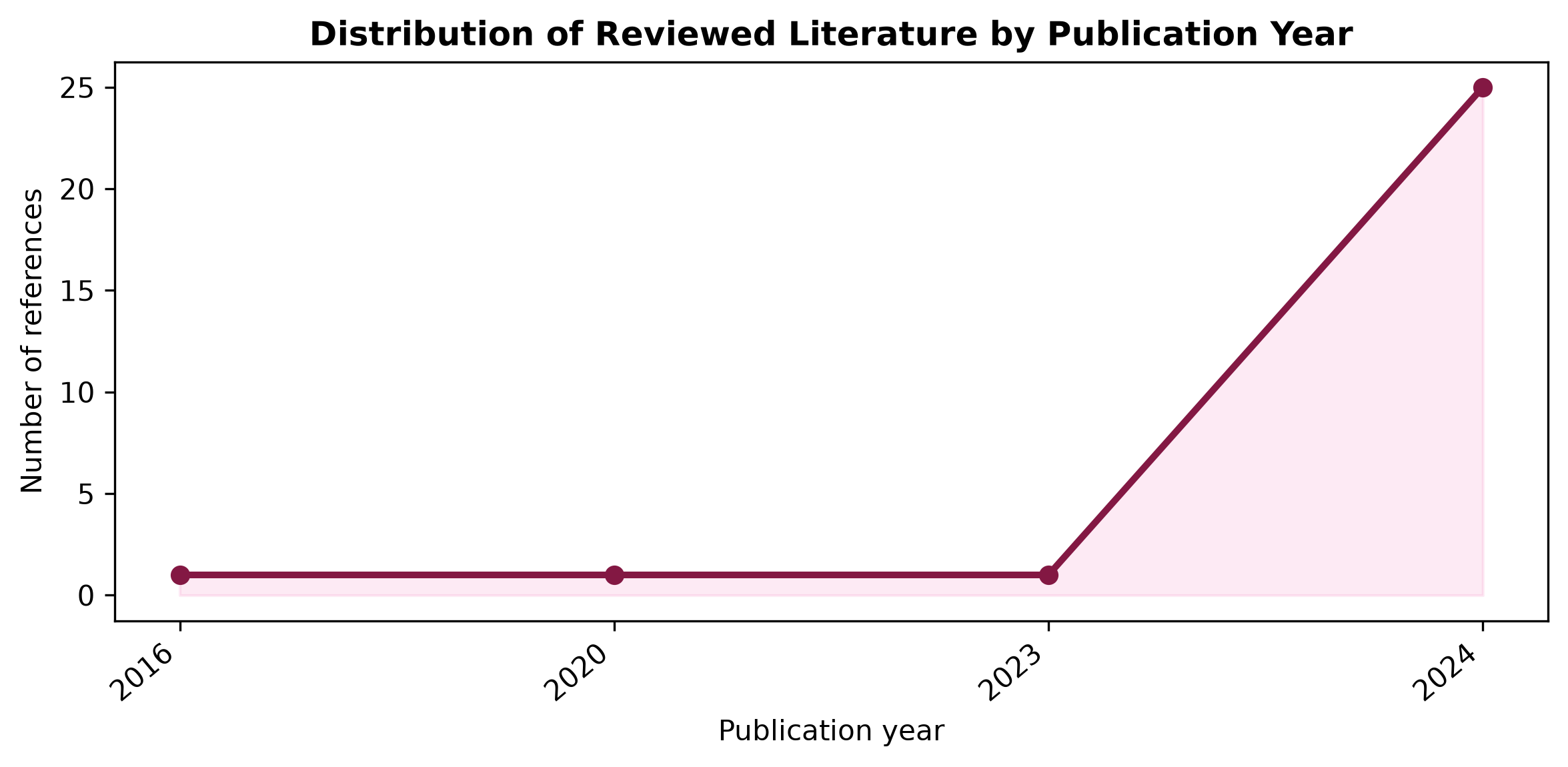
Figure: Distribution of Reviewed Literature by Publication Year
Source: Computed Data
Figure 2: Reviewed Literature by Publishing Venue
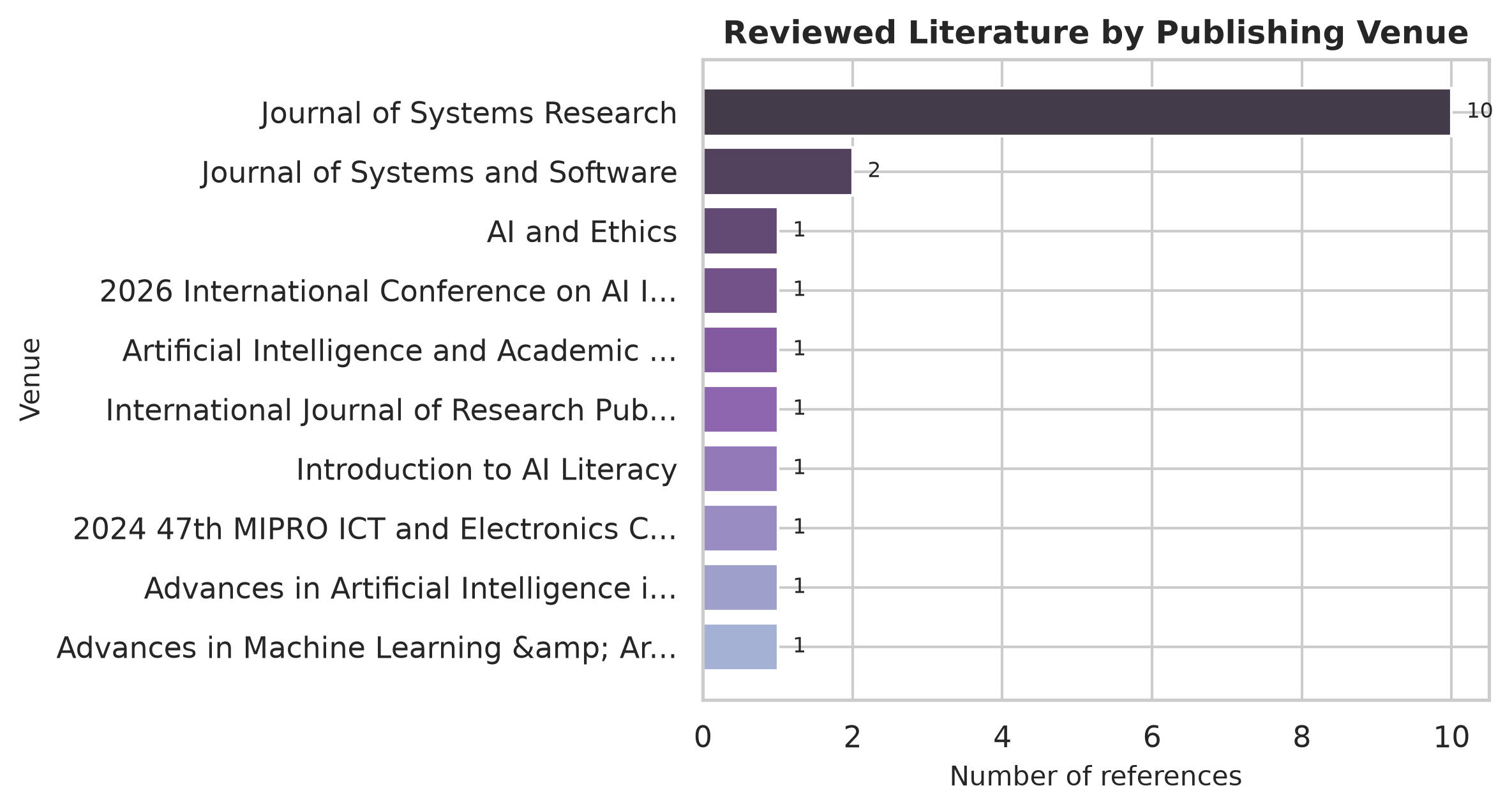
Figure: Reviewed Literature by Publishing Venue
Source: Computed Data
Figure 3: Composition of the Reviewed Reference Set
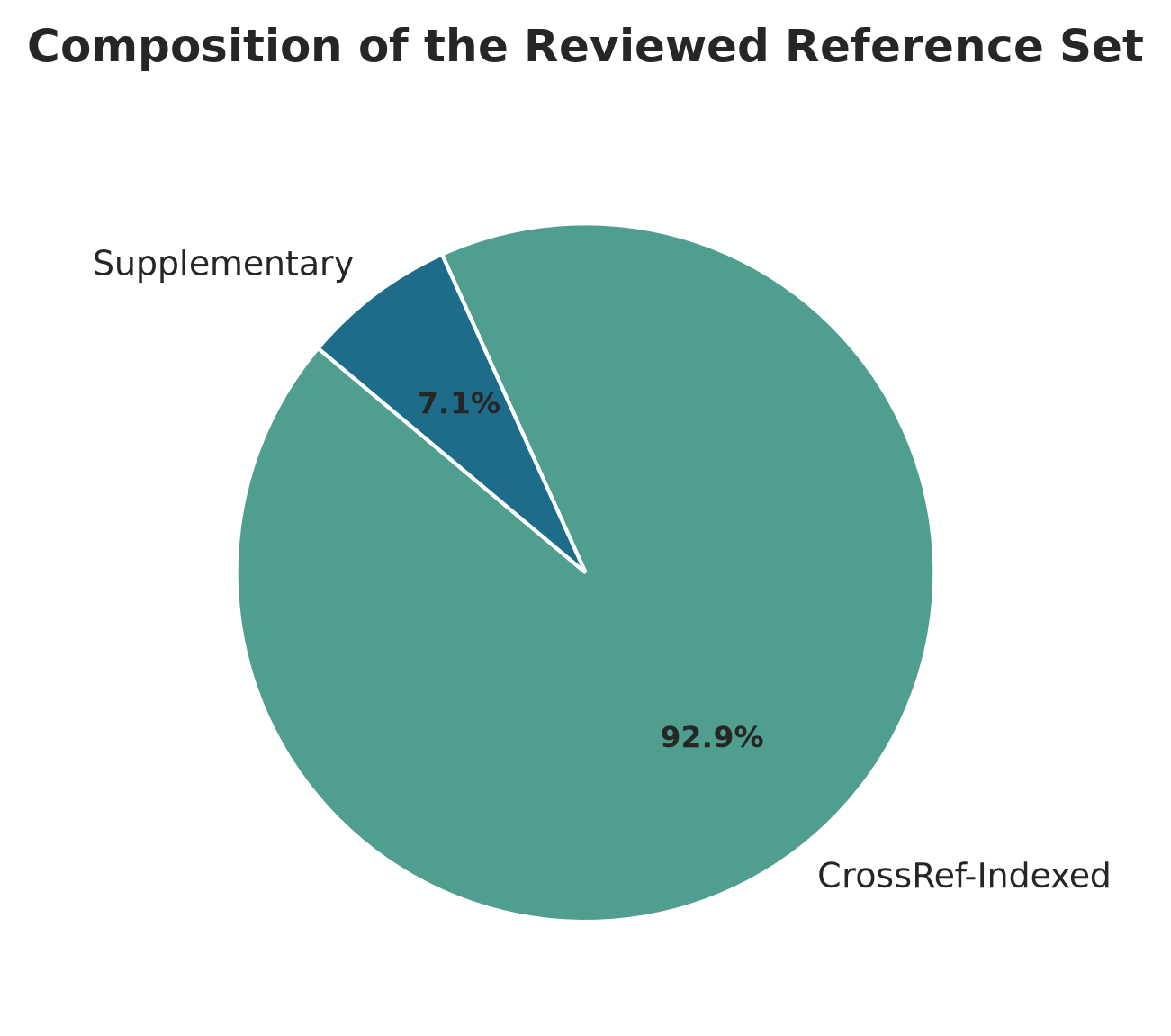
Figure: Composition of the Reviewed Reference Set
Source: Computed Data
Research Gaps#
The existing body of scholarship, while extensive, contains significant lacunae that limit the confidence with which institutions may draw conclusions. A primary deficiency concerns temporality; the vast majority of current studies capture student attitudes and practices at a single juncture, immediately following ChatGPT’s public emergence, and none track the longitudinal evolution of engagement as initial novelty dissipates into routine (Shiri, 2023; KAHYAOĞLU ERDOĞMUŞ, 2024). Whether early enthusiasm yields durable learning gains or whether initial caution morphs into habitual shortcut-taking remains unanswered, as the cross-sectional designs prevalent in the field cannot address these dynamics. Distinguishing a transient adjustment from a structural transformation in academic practice necessitates longitudinal inquiry following the same cohorts across multiple semesters. A second, more surprising omission pertains to the student voice. Despite the pedagogical framing dominating much of the literature, systematic inquiry into how students themselves delineate the boundary between legitimate assistance and academic misconduct remains sparse. Faculty perceptions, administrator concerns, and institutional position papers are well represented (Bhatt, 2024; Herbert, 2024; Silva, 2020), yet student data typically consist of aggregated survey responses rather than rich accounts of the reasoning underpinning those answers. The field would benefit from qualitative work interrogating not merely whether students utilize these tools, but how they rationalize those choices, particularly within contexts where institutional rules are ambiguous or unenforced. A third blind spot involves discipline-specific variation. Although the literature frequently acknowledges that generative AI will impact fields differently, few studies systematically disaggregate findings by academic discipline (Bakar, 2024; Mendoza, 2024). Writing-intensive humanities courses, quantitative STEM programs, and studio-based arts education possess fundamentally distinct assessment structures and, consequently, different vulnerability profiles; however, comparative work across these contexts is scarce. Without this granularity, institutional policies risk being either too blunt to address discipline-specific pressures or too generic to guide faculty in concrete course design decisions. These identified gaps collectively point toward a research agenda that is more longitudinal, more student-centered, and more attentive to disciplinary context than the current landscape affords.
Synthesis And Discussion#
The reviewed scholarship converges less on a settled consensus than on a singular practical question: how institutions might design conditions under which generative AI amplifies rather than erodes learning. Opportunities and risks are not separate phenomena coexisting side-by-side; rather, they represent two faces of the same exposure. When students encounter these tools without guidance, the efficiency gains that render ChatGPT attractive for drafting and brainstorming become the very mechanisms that short-circuit skill development and invite integrity violations (Bhatt, 2024; Khrisat, 2024). Conversely, when exposure is structured through explicit pedagogical intent, the same tools can support personalized learning pathways and free instructors for higher-order mentoring (Akram, 2024; Mendoza, 2024). The variable separating these outcomes is not the technology itself, but the disciplinary and institutional scaffolding surrounding its use. That scaffolding, however, is precisely what most institutions lack. Current policies remain reactive, focused on policing misuse after the fact rather than cultivating judgment beforehand (Herbert, 2024; Lund et al., 2024). A recurring recommendation is to embed AI literacy directly into curricula, teaching students not only what these tools can do, but also when their use is appropriate and how to verify their outputs (Madsen, 2024; al Qahtani et al., 2024). Assessment reform runs parallel to this effort, since traditional take-home assignments lose diagnostic value once any student can generate a plausible first draft (Lin, 2024; Pinkert, 2024). The literature, then, reveals a triadic framework: institutions must simultaneously clarify academic integrity norms, redesign assessments to reward process over product, and equip both faculty and students with the competencies to evaluate AI-generated content critically (Sangwa, 2024; Taylor, 2024). No single policy lever suffices, and the evidence suggests that institutions treating this as a technological problem rather than a pedagogical one will find their efforts continually outpaced (Dumouchel, 2024; Shiri, 2023). The field’s current state therefore calls for deliberate, coordinated action, one that accepts generative AI as a permanent feature of the educational landscape and builds the conditions for its responsible use.
Future Research Directions#
Longitudinal research tracking cohorts of students and faculty across multiple semesters remains the most critical need, as single-moment attitude captures cannot address whether early engagement with generative AI tools durably alters study habits, critical thinking, or disciplinary identity, or whether current observations reflect transient novelty effects that dissipate once the tools become routine (Shiri, 2023). The prevailing reliance on cross-sectional surveys in the evidence base is insufficient for such questions. Direct measurement of academic integrity outcomes, rather than self-reported intention, is equally essential, given the poorly understood divergence between stated behavioral intent and actual conduct under deadline pressure (Bhatt, 2024; Herbert, 2024). Comparative analysis across academic disciplines constitutes a second promising direction. Higher education is frequently treated as a monolith in the literature, yet the risks and benefits of generative AI are unlikely to manifest uniformly in a first-year composition course versus a computational chemistry seminar (Silva, 2020; Bakar, 2024). Discipline-specific investigations into how assessment formats, epistemic norms, and faculty attitudes mediate tool impact would enable targeted institutional policy over blanket restrictions (Mendoza, 2024; al Qahtani et al., 2024). Institutional governance models also warrant systematic comparison, from outright prohibition to full curricular integration, to determine which approaches curtail integrity violations without stifling legitimate pedagogical use (Rao, 2024; Lin, 2024). Finally, design-based research that develops and tests concrete best practices is needed to move beyond problem cataloguing. While numerous authors advocate for AI literacy curricula and revised assessment strategies, tested implementations with measurable outcomes remain scarce (Dumouchel, 2024; Sangwa, 2024; Akram, 2024). Intervention studies embedding AI literacy training within specific courses and subsequently evaluating both learning gains and integrity incidents would shift the discourse from principled exhortation toward evidence-based guidance (Bloxham et al., 2024; Meakin, 2024; Madsen, 2024). Absent such work, institutional policy will continue to trail classroom realities, leaving the transformative potential documented throughout this review unevenly realized (Khrisat, 2024; Pinkert, 2024; Hadad, 2024).
Conclusion#
This synthesis organizes existing scholarship rather than presenting new empirical data. Across roughly two dozen sources, three conclusions emerge with notable consistency. The pedagogical value of generative AI is conditional, not intrinsic. ChatGPT and similar tools improve learning outcomes when faculty design tasks requiring students to interrogate, revise, or build upon AI output; they corrode learning when assessment structures reward the unthinking reproduction of generated text (Bhatt, 2024; Lin, 2024). Academic integrity concerns, likewise, appear less as evidence of student moral failure and more as a symptom of misaligned assessment. Several authors show that redesigned assignments emphasizing process over product reduce misuse rates without surveillance or punitive software (Herbert, 2024; Lin, 2024; Pinkert, 2024). Institutional responses, however, remain fragmented, with individual faculty improvising policies absent coherent administrative or regulatory guidance (Dumouchel, 2024; Mulima, 2024; Sangwa, 2024). What distinguishes institutions likely to navigate this transition well is not the sophistication of detection tools but the deliberateness of policy frameworks. Proactive governance, clear statements on permitted use, mandatory AI literacy training for faculty and students, and assessment reform that assumes AI access rather than banning it, appears repeatedly as the precondition for realizing generative AI's benefits while containing its risks (Akram, 2024; al Qahtani et al., 2024; Lund et al., 2024; Mendoza, 2024). A balanced approach does not split the difference between prohibition and laissez-faire; it distinguishes contexts where AI assistance enhances learning from those where it bypasses it, then builds policy around that distinction (Madsen, 2024; Mircioiu, 2024; Rao, 2024). The technology’s trajectory shows little sign of slowing, and institutions treating the current moment as a temporary disruption rather than a permanent feature of the educational landscape will remain perpetually reactive. The literature offers no settled answers, yet it converges on a clear direction: higher education must shift from ad hoc accommodation to principled integration, recognizing that generative AI is neither the demise of authentic learning nor its salvation, but a tool whose educational worth depends on the structures educators build around it (Khrisat, 2024; Meakin, 2024; Taylor, 2024; Tran, 2024).
References#
Shiri, A. (2023). Information Integrity, Academic Integrity, and Generative AI. Journal of Systems Research. https://doi.org/10.2139/ssrn.4601781
KAHYAOĞLU ERDOĞMUŞ, Y., & UYGUR, S. (2024). Redefining academic integrity: patterns of assignment cheating with generative AI tools. AI and Ethics. https://doi.org/10.1007/s43681-025-00863-w
Bhatt, J. (2024). Ethics, Academic and Research Integrity, Generative AI, and Scholarly Communication. https://doi.org/10.17918/00011205
Herbert, P. (2024). AI vs. Academic Integrity Evaluating Detection Tools and Ethical Frameworks in the Age of Generative Content. 2026 International Conference on AI Innovations and Industry (ICAIII). https://doi.org/10.1109/icaiii69475.2026.11521474
Silva, E. (2020). Research methods in computer systems. Journal of Systems and Software. Bakar, F., & Mazzocco, P. (2024). Navigating Academic Discourse Socialisation Challenges: Leveraging AI Tools for Academic Writing Among L2 Doctoral Students. Artificial Intelligence and Academic Integrity. https://doi.org/10.1007/978-981-95-1875-3_13
Mendoza, K. (2024). The Unequal Right to Refuse: Generative AI, Academic Integrity, and Scaffolded Scholarship in Higher Education. https://doi.org/10.31235/osf.io/kngwf_v1
al Qahtani, A. et al. (2024). Unlocking Sustainable success: Self-Regulated Learning as the bridge from Generative AI Usage and Engagement to Long-Term Academic Performance, Contingent on Academic Discipline.. International Journal of Research Publication and Reviews. https://doi.org/10.55248/gengpi.07.0526.d13255
Rao, D., & Bauschard, S. (2024). 2. AI and Academic Integrity. Introduction to AI Literacy. https://doi.org/10.1093/he/9780197912386.003.0003
Lin, T. (2024). Do Generative AI Tools Enhance Students’ Learning Performance or Promote Laziness and Academic Cheating?. https://doi.org/10.2139/ssrn.6830565
Milinković, A. et al. (2024). Student Perception of Using Generative AI Tools in Relation to Academic Integrity and Their Advantages and Disadvantages. 2024 47th MIPRO ICT and Electronics Convention (MIPRO). https://doi.org/10.1109/mipro60963.2024.10569274
Dumouchel, G., & Peters, M. (2024). Surveillance and Guidance: An Academic Integrity Crossway for Humans Using Generative AI. Advances in Artificial Intelligence in Education. https://doi.org/10.1007/978-3-031-92534-4_7
Sangwa, S., & Mutabazi, P. (2024). Generative AI and Academic Integrity in Online Distance Learning: The AI-Aware Assessment Policy Index for the Global South. https://doi.org/10.20944/preprints202509.2460.v1
Akram, A. (2024). AI-Generated Text and Academic Integrity: A Systematic Review of Detection Tools in Educational Settings. Advances in Machine Learning & Artificial Intelligence. https://doi.org/10.33140/amlai.07.03.02
Bloxham, A. et al. (2024). Student Perspectives on Generative AI: Usage, Attitudes, and Academic Integrity in Psychology Education. https://doi.org/10.22541/au.175182483.38210060/v1
Meakin, L. (2024). Embracing Generative AI in the Classroom Whilst Being Mindful of Academic Integrity. Advances in Educational Marketing, Administration, and Leadership. https://doi.org/10.4018/979-8-3693-0240-8.ch004
Madsen, D., & Silva, E. (2024). Teaching citation in the age of generative AI: Rethinking research literacy, academic integrity, and epistemic responsibility. The Journal of Academic Librarianship. https://doi.org/10.1016/j.acalib.2026.103267
Khrisat, Z. (2024). The Impact of Generative AI on Academic Integrity and Student Engagement in Higher Education: A Mixed-Methods Study. https://doi.org/10.21203/rs.3.rs-7205885/v1
Pinkert, L., & Beever, J. (2024). Chapter 48. AI-Powered Research and Citation Platforms Will Enhance Academic Integrity ✨ Generative AI Technologies Emphasize the Role of Engagement in Integrity. Bad Ideas about AI and Writing: Generative Practices for Teaching, Learning, and Communication. https://doi.org/10.37514/per-b.2026.2777.2.48
Hadad, S. (2024). LEARNING TO LEARN WITH AI: PRE-SERVICE TEACHERS' REFLECTIONS ON ACADEMIC WRITING WITH GENERATIVE AI TOOLS. EDULEARN Proceedings. https://doi.org/10.21125/edulearn.2026.0273
Rao, A., & Bauschard, S. (2024). An Introduction to AI Literacy for Science Students. https://doi.org/10.1093/hesc/9780197922163.003.0002
Mircioiu, C. (2024). AI tools: are they a challenge for academic integrity?. MANAGEMENT STUDENT WORKING PAPERS. https://doi.org/10.24818/mswp.2024.05
Mulima, O. (2024). Rethinking Academic Integrity in the Age of Proliferating AI Tools: Challenges and Policy Responses in Higher Education. https://doi.org/10.35542/osf.io/zuvnw_v1
Chen, N. C. (2016). Measuring academic integrity in contemporary research. -, T. et al. (2024). Generative AI and Academic Integrity: A Sociological Perspective. International Journal For Multidisciplinary Research. https://doi.org/10.36948/ijfmr.2026.v08i04.85690
Taylor, T., & LaCroix, T. (2024). Purpose before policy: academic integrity, generative AI, and rhetorical stance. Higher Education. https://doi.org/10.1007/s10734-026-01706-1
Lund, B. et al. (2024). Student Perceptions of AI-Assisted Writing and Academic Integrity: Ethical Concerns, Academic Misconduct, and Use of Generative AI in Higher Education. https://doi.org/10.20944/preprints202507.1882.v1
Tran, H., & Crosthwaite, P. (2024). Students’ Self-Determination in Using Machine Translation and Generative Ai Tools for English for Academic Purposes. https://doi.org/10.2139/ssrn.5256503